
More Than a Sign of Summer: How Fireflies Led Us to Wonder and Science
By Colleen O’Connor, Impact + Engagement Officer, Cincinnati Parks Foundation
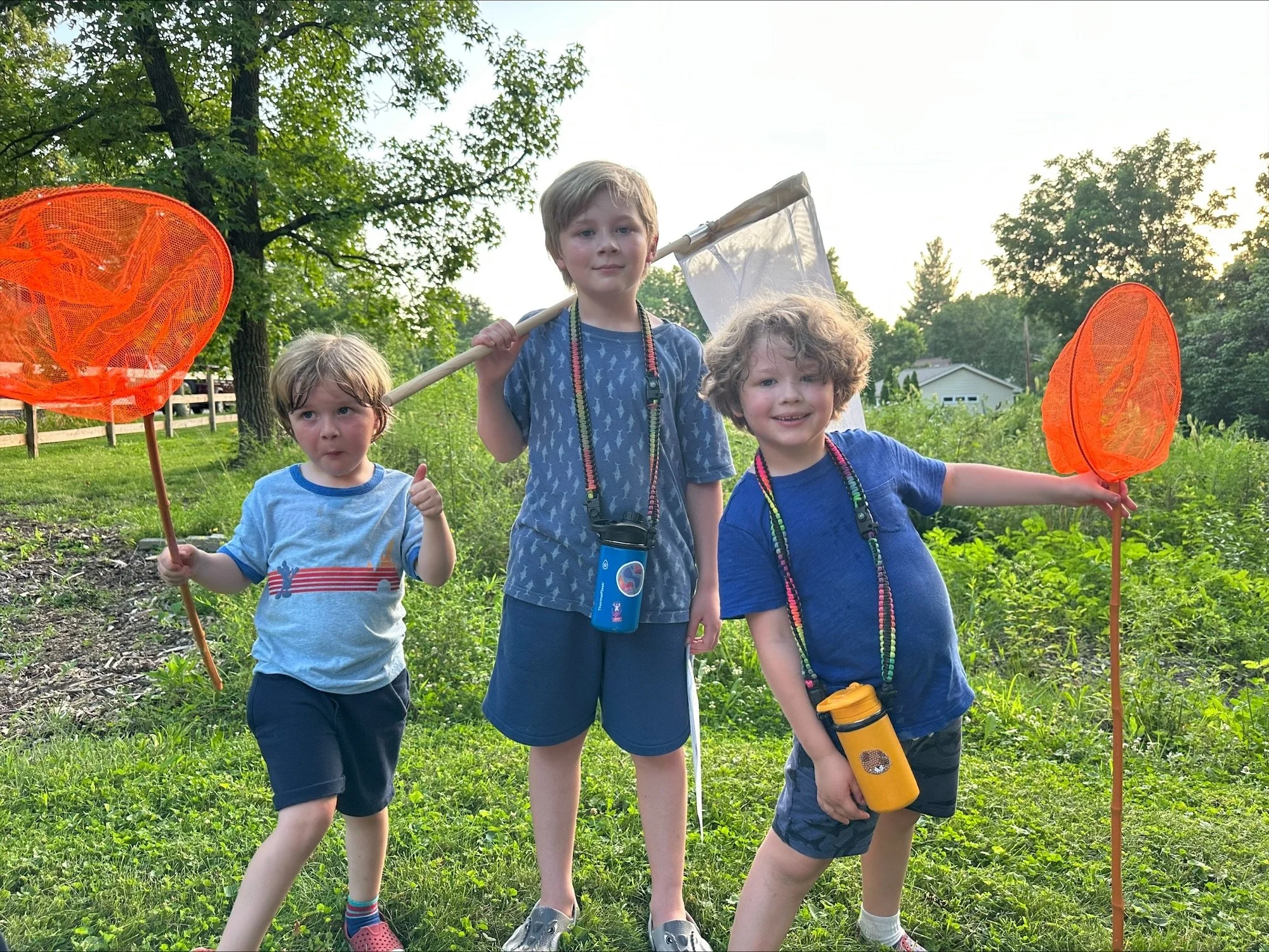
The young trio of bug catchers at Buttercup Valley.
Photo: Colleen O’Connor
On one of the hottest weeks of summer, I loaded three of my four kids into the car after an already long day at camp. Everyone was tired, sweaty and ready to stay home.
Instead, we were headed to a Firefly BioBlitz at Buttercup Valley.
As we packed red-light headlamps, folding chairs, snacks, bug spray and plenty of cold water, the complaints began.
“Why are we doing this?”
“It’s too hot.”
Honestly, I wondered the same thing.
When we arrived, our guide, Rachel, welcomed us with bug nets, collection containers and an infectious enthusiasm for one of summer’s smallest wonders. Within minutes, the grumbling disappeared.
The kids were hooked.
We learned that Cincinnati is home to about a dozen species of fireflies, each with its own distinctive flash pattern. Every blink, pause and swoop is part of a complex language fireflies use to find one another in the dark.
Rachel also introduced us to the Blue Ghost, one of the region’s rarest fireflies. Unlike the familiar blinking insects in our backyards, Blue Ghosts emit a continuous blue-green glow as they float silently through the forest.
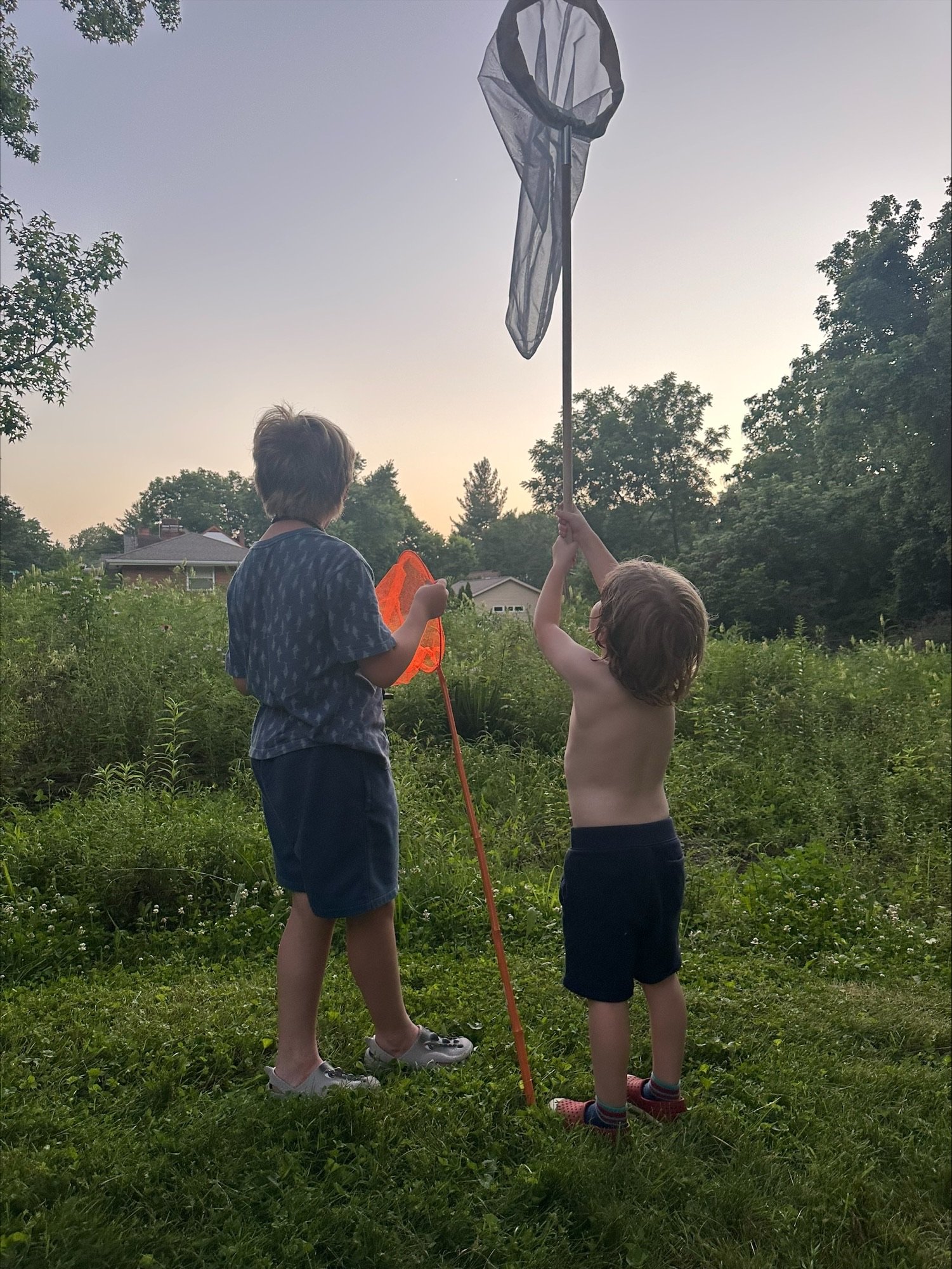
Sometimes conservation begins with curiosity, a bug net and the willingness to spend a warm summer evening outside.
Photo: Colleen O’Connor
Suddenly, this was about more than catching lightning bugs. We had stepped into a hidden world that had been unfolding around us every summer, whether we noticed it or not.
As dusk settled over the meadow, the first flashes appeared.
One, then another, until hundreds of lights flickered through the grasses and trees. Every few steps brought another excited shout.
“I caught one!”
“Did you see that flash?”
Each firefly was admired briefly and then gently released.
We also learned that the evening was about more than wonder. It was an opportunity to contribute to science.
During a BioBlitz, community members help observe and document wildlife. Our firefly findings could be submitted to the Firefly Atlas and iNaturalist, adding to research about where different species live, how their populations are changing and how habitat restoration supports biodiversity.
Scientists cannot collect all of that information alone. They rely on observations made by everyday people spending evenings much like ours.
We lasted only a little more than an hour before the heat, tired legs and bedtime caught up with us. But in that time, we learned to notice different flash patterns, heard about rare species living in our region and became citizen scientists with little more than bug nets, flashlights and curiosity.
It became one of the highlights of our summer.
Buttercup Valley reminded us that parks are more than beautiful places to visit. They are living classrooms where curiosity grows, memories are made and conservation happens one observation at a time.
Fireflies are also signs of healthy ecosystems. They depend on clean water, healthy soil, native plants and dark night skies. Protecting the forests, meadows and wetlands they call home helps preserve not only wildlife, but also the summer traditions families have cherished for generations.
By the time we walked back to the car, no one was talking about the heat.
My kids thought they had spent the evening catching lightning bugs. What they were really doing was helping researchers better understand and protect them.
They were also learning that conservation does not always begin with a grand gesture. Sometimes it starts with curiosity, a bug net and the willingness to spend a warm summer evening outside.
Keep Exploring Cincinnati Parks
Firefly BioBlitzes and other family-friendly nature events are held throughout Cincinnati Parks. You can regularly find events like these at French Park, often in partnership with the Friends of French Park Cincinnati Park Advisory Council. Experiences like these invite people to explore the natural world while contributing to conservation, one of the Cincinnati Parks Foundation’s core pillars.
Conservation work in parks like French Park helps restore healthier forests and habitats, support native plants and wildlife, and create more opportunities for future generations to experience the wonder of nature close to home.