
Owl’s Nest Park, and the Power of Shared Space
At Cincinnati Parks Foundation, we often talk about parks as essential civic spaces. They are places of beauty, wellness, play, and connection. They are also places of memory. Some parks hold the story of a neighborhood. Others hold the story of several neighborhoods at once. Owl’s Nest Park does both. Set at the meeting point of East Walnut Hills, Evanston, and O’Bryonville, Owl’s Nest has served as shared ground for generations, carrying the history of the city and the everyday life of the communities around it.
The Heart of Three Neighborhoods
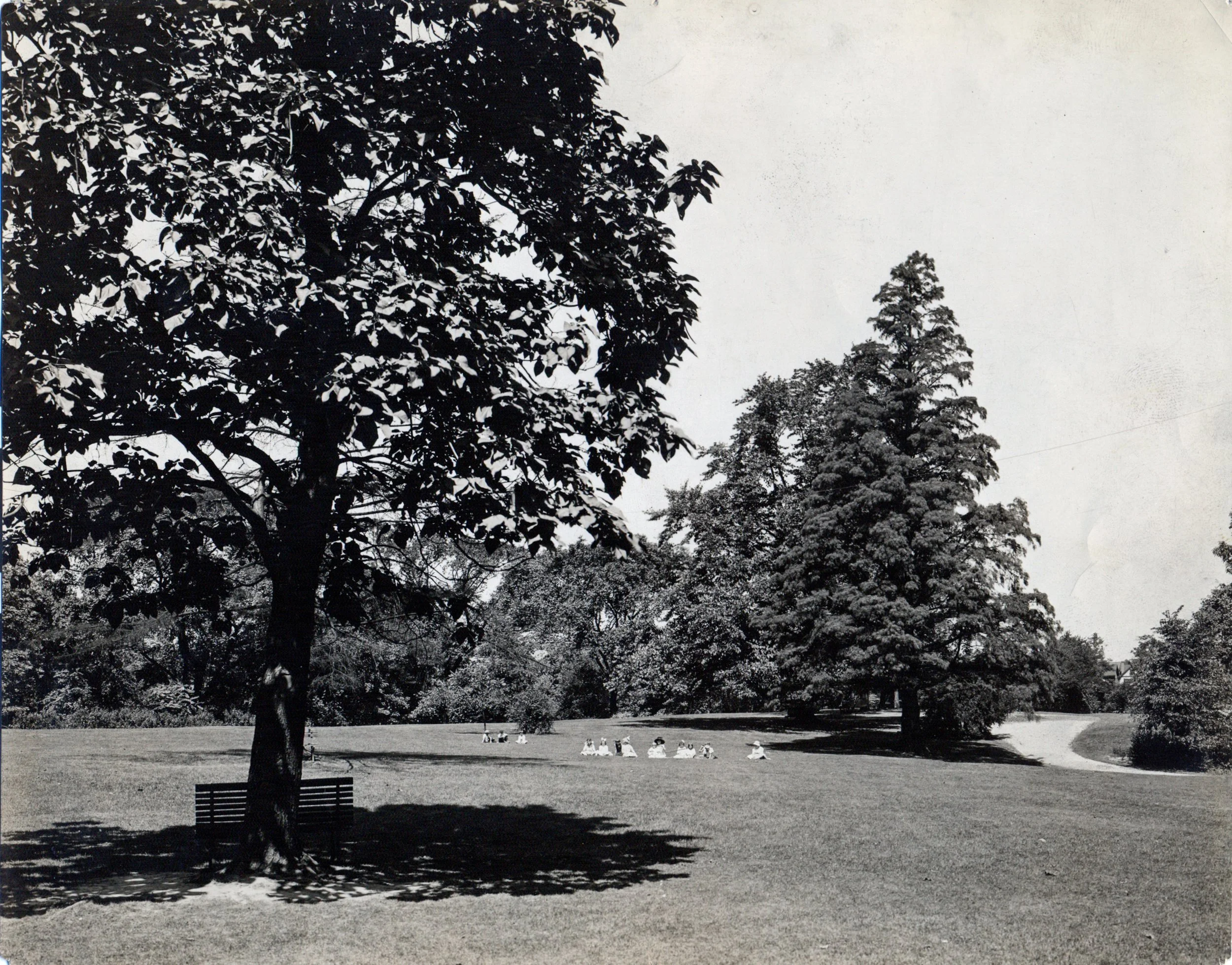
Photograph from Moser & Son, Owl’s Nest Park, Sept. 1, 1913, courtesy of Cincinnati Parks Bettman Arhives
The park’s roots stretch back to 1905, when Charles E. and Edward C. Perkins donated the land to the City of Cincinnati in honor of their parents. Owl’s Nest takes its name from the homestead that once stood on the site, a reminder that this public landscape began as private family ground before becoming something much larger: a place held in common. What began as just over five acres has grown to more than 10, but its real significance has never been measured by acreage alone.
Part of what makes Owl’s Nest so meaningful is where it sits. East Walnut Hills carries a strong sense of historic residential character. Evanston brings a powerful tradition of neighborhood leadership and civic engagement. O’Bryonville adds the energy of a neighborhood business district along Madison Road, giving this part of the city its street-level rhythm and local vitality. Owl’s Nest is where those identities meet.
That is why the park has always been more than green space. It is shared ground. It is a place where neighborhood lines blur, where people gather across communities, and where public space still has the power to bring people together.
The History Behind Owl’s Nest
The history of the site gives this park an even deeper resonance. At the heart of Owl’s Nest stands the Owl’s Nest Pavilion, designed by the Cincinnati architectural firm Elzner & Anderson and dedicated in 1933 as a pool and field house. It once included restrooms and concessions and overlooked a swimming pool and baseball field that helped make the park a center of recreation and neighborhood life.
Like many historic park structures, the pavilion was built with both usefulness and civic beauty in mind. It was meant to serve people. It was designed to be part of daily life, not simply admired from a distance. For decades, it helped anchor the park as a place of recreation, gathering, and neighborhood identity.
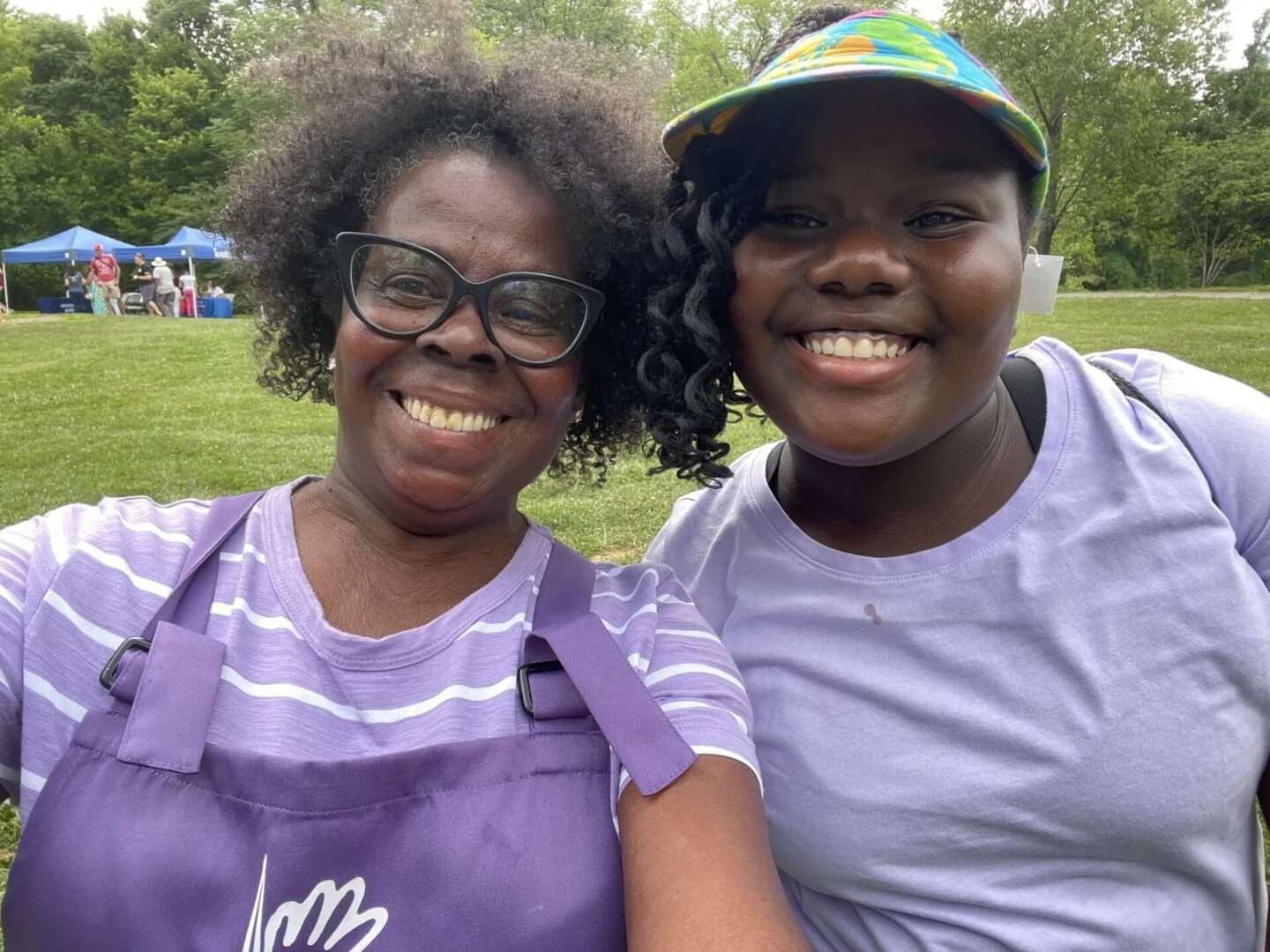
Marye and Grandaughter in Owl’s Nest Park, courtesy of Marye Ward.
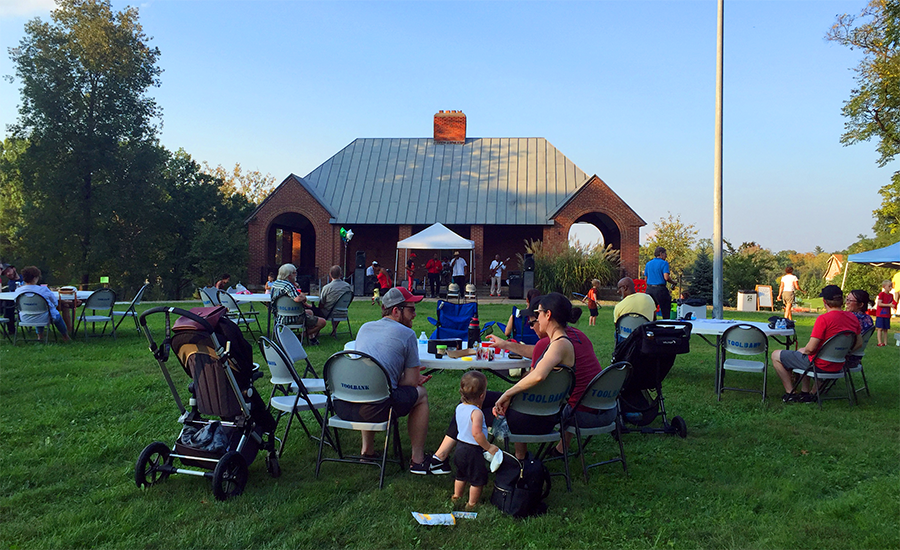
Community members enjoy an event at Owl’s Nest Park.
A Community That Never Let Go
It’s clear after getting to know community leader Marye Ward that Owl’s Nest is a park people feel in personal ways. Marye describes it as a place to “touch grass and breathe,” and her memories are simple and powerful: “What did we do when we were kids? We went to the park!”
In those few words is the heart of this story. Parks matter because they give people room to gather, to exhale, to play, to reconnect, and to belong.
Marye has helped us see Owl’s Nest not just as a site in need of restoration, but as an active community anchor with a living culture around it. As a member of the Evanston Community Council, she has worked to bring people into the park and remind neighbors that it belongs to them. She has helped organize events that make the park feel welcoming and shared, including EvanstonFEST and other community festivals. In 2023, she noted that five festivals were held, three of them in Owl’s Nest Park, with programming shaped by music and community partnership. Those events included everything from gospel and jazz to classical music, all with the goal of bringing people together across neighborhood lines.
This theme of connection is central to the story of Owl’s Nest. Marye has spoken openly about how the park has sometimes felt like two separate places, one for Evanston and one for East Walnut Hills. What excites her about the next chapter is the possibility that design can help change that. Better accessibility, stronger entrances, and an open pavilion can do more than improve circulation. They can help people experience the park as one shared space.
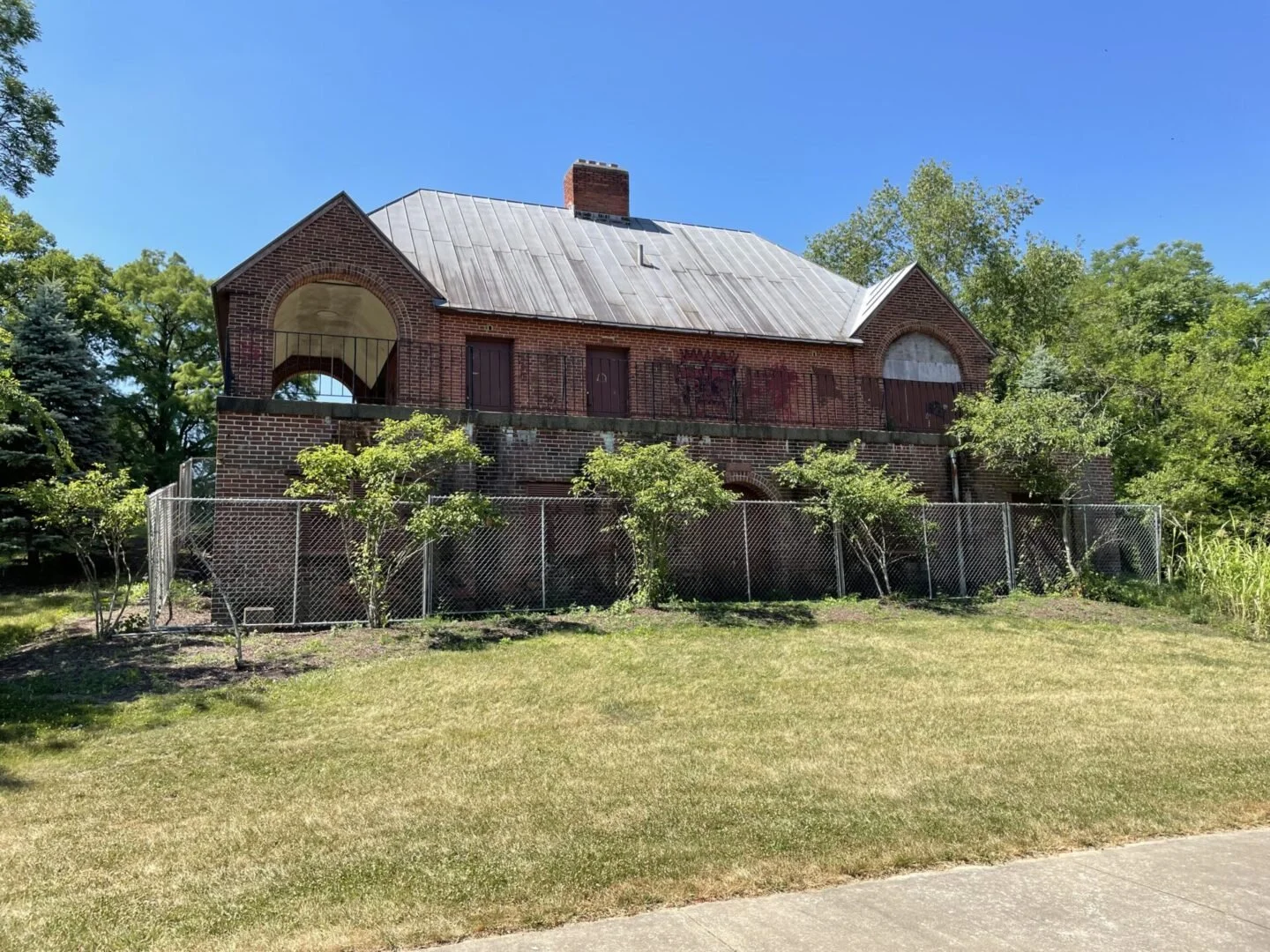
The Owl’s Nest Pavilion in 2024.
Why Owl’s Nest Needs Help Now
Over time, the park felt the effects of deferred investment. The pool closed permanently in the 1990s. The pavilion was shuttered. The structure and the surrounding park gradually fell into disrepair. Community members never stopped caring about Owl’s Nest, but the condition of the site no longer matched its importance.
The need is not theoretical. It is visible in the infrastructure itself. Important amenities have aged. Access through the park can feel fragmented. The pavilion, once the heart of the site, has remained closed. Lighting, pathways, entrances, and restrooms all need thoughtful improvement.
Community feedback has reinforced that point again and again. Residents have described Owl’s Nest as a beautiful green space for multiple neighborhoods and called the pavilion a central locus of community. Others have emphasized that it is a much-needed gathering place in a highly residential area, and that preserving the historic structure helps anchor neighborhood identity. More recent feedback has shown strong enthusiasm for improvements that make the park more welcoming, especially better lighting, restrooms, and stronger connectivity throughout the site, along with safer movement at and across Madison Road and more consistent maintenance.
What Cincinnati Parks Foundation Is Building
This is where Cincinnati Parks Foundation has the opportunity to make a lasting difference. Through Owl’s Nest Park 2.0, we raised support for a $4.1 million plan centered on restoring the pavilion and completing critical park improvements shaped by community input.
The plan includes historic preservation of the pavilion’s brick façade, arches, and roofline, along with accessible restrooms, an ADA parking space, concrete pathways that better link the entrances to the pavilion, a plaza and stage for community events, and upgraded lighting, landscaping, and entrances that make the park feel safer, more cohesive, and more welcoming for everyday use.
This vision grows out of years of community commitment. Representatives from the surrounding neighborhoods formed the Owl’s Nest Park Advisory Council roughly 20 years ago and have worked together to support this shared green space. In 2005, community members led a $2 million public-private redevelopment effort with the goal of knitting the neighboring communities together. In 2021, when the aging pavilion faced demolition, the Advisory Council joined with the East Walnut Hills Assembly, Friends of Evanston Park, and the O’Bryonville Business Association to protest the plan. That response helped save the building and helped launch the community engagement process that is shaping the project now.
Owl’s Nest Park Pavilion, North Perspective. Illustration by KZF Design.
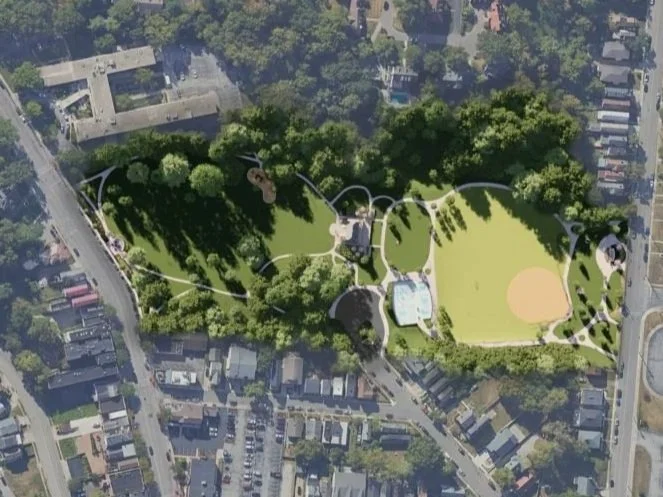
Illustrative site plan by KZF Design.
Investing in a Shared Future
What makes Owl’s Nest especially compelling to us is that this is not a story about inventing community where none exists. It is a story about honoring and strengthening a community that is already here.
Marye’s work with children and families makes that especially clear. Beyond the park, she co-founded and administers the Cincinnati United Youth Football and Cheer League, and she has connected that work to the same values she sees in Owl’s Nest: children need fresh air, time outside, and opportunities to connect in person. A revitalized park supports all of that. It supports the kind of neighborhood life that helps young people grow.
It also supports what comes next. Marye has spoken about hoping for a park full of people: children on the playground, young people on the baseball diamond and basketball courts, neighbors walking, gathering, and reconnecting with one another and with nature. She imagines markets, wellness programming, and one day even plays in the park once the new stage is ready. She also spoke about Jam Fest, a family-focused event planned with other community members, featuring activities that showcase the whole park.
For us, that is the deeper case for investing in Owl’s Nest Park. This park carries history. It carries neighborhood identity. It carries the hopes of residents who have fought for it, programmed it, and kept showing up for it. And now it carries a real opportunity. With donor support, we can help restore a landmark, improve access and safety, and strengthen one of the few places where three neighborhoods can continue to meet on shared ground.
Owl’s Nest Park is already important. Our job is to help make sure its future reflects that truth.
Visit Owl’s Nest Park
1984 Madison Rd. Cincinnati, OH 45208
Owl's Nest Park in Evanston features playgrounds, basketball courts, a baseball diamond, picnic areas, grills, a pavilion, and a paved walking path through the park.
The Steve Schuckman Tai Chi Series:
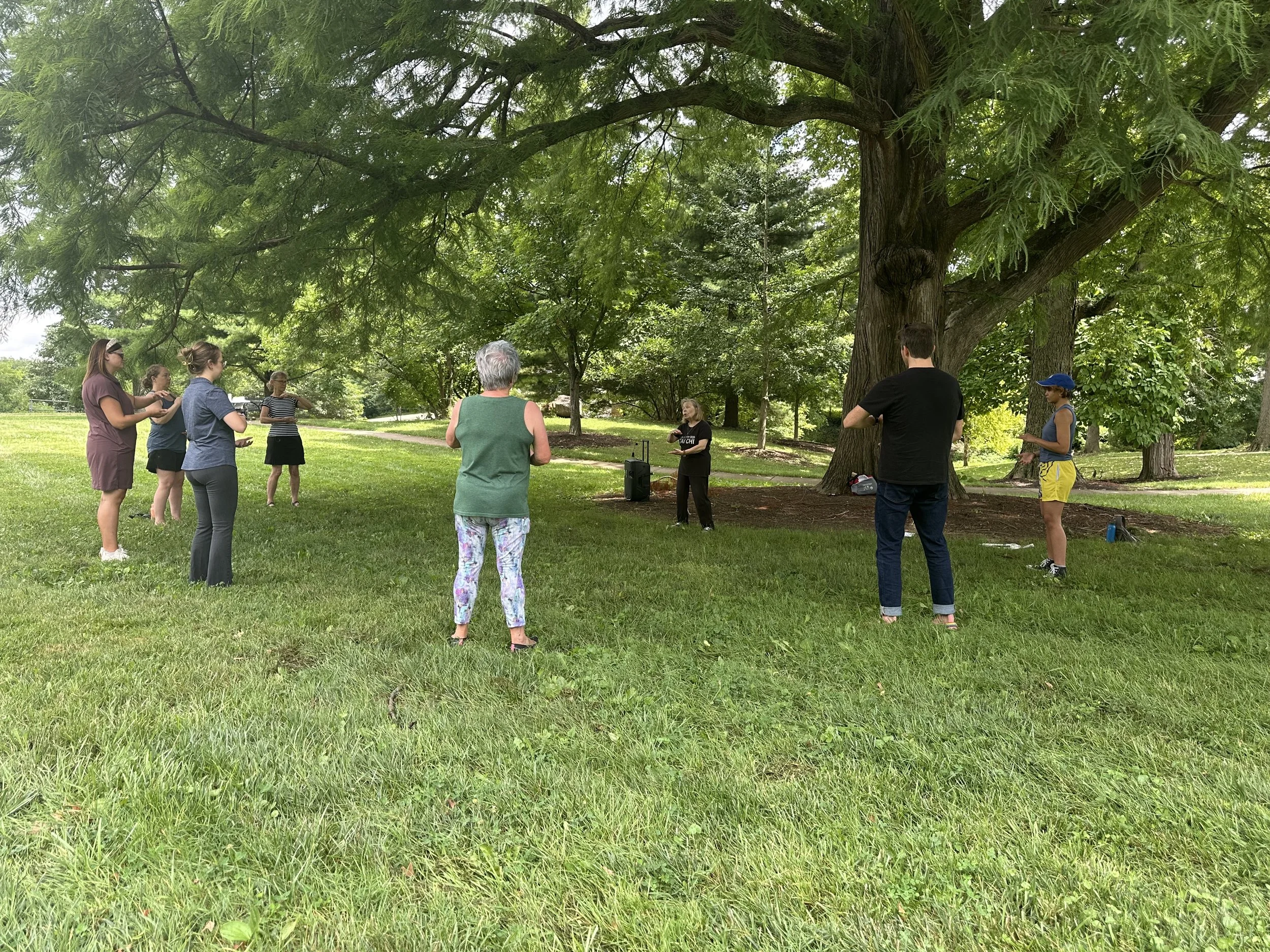
Osher leading a Tai Chi class in 2025.
Through Cincinnati Parks + Rec for Wellness, and in partnership with the Osher Center for Integrative Health at the University of Cincinnati, Owl’s Nest Park hosts free monthly Tai Chi and mindfulness classes that invite neighbors to experience the park as a place of calm, connection, and care. Typically held on the third Wednesday of the month at noon and led by certified instructor Jennifer Woods, the series reflects a broader vision for Owl’s Nest: not only as a restored historic park, but as an active, welcoming space that supports community well-being in everyday life.