
Four Cincinnati Parks I Love Exploring in the Fall
Fall might be my favorite time to walk Cincinnati. The heat breaks, the hills change color and familiar places suddenly feel a little different. It's the perfect time to lace up my boots and explore the wooded hillsides, creek valleys, historic landscapes and overlooks that make our city so special.
Here are four Cincinnati Parks that offer something unique in the fall. I’ll share a little history, some hidden gems and how Cincinnati Parks Foundation and its partners are helping protect and care for these places for generations to come.
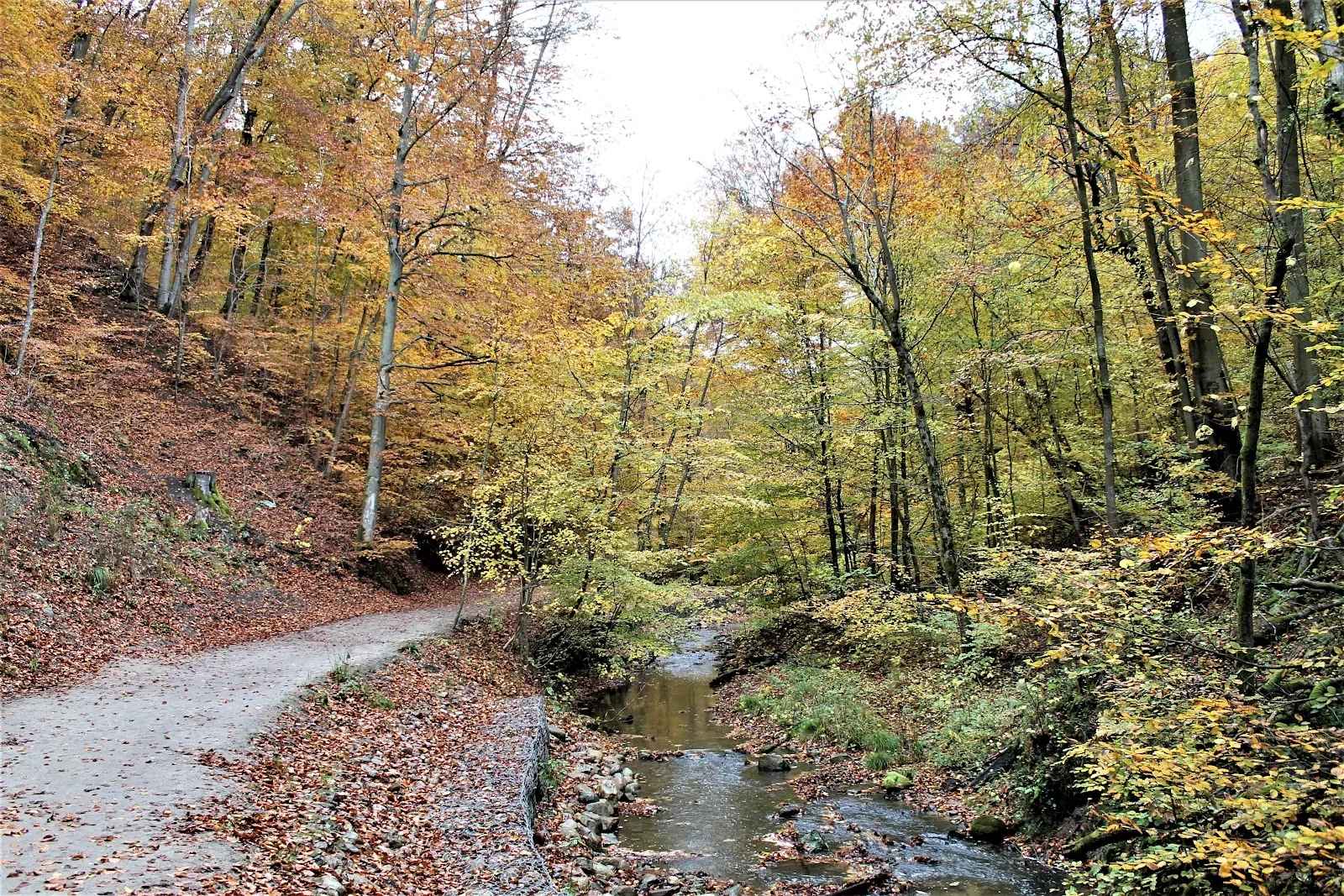
French Park - Get a little lost in the woods.
French Park is one of my favorite places when I want a hike that feels surprisingly far removed from the city.
The park began as the country estate of Herbert Greer French, a longtime Procter & Gamble executive who assembled several farms into a property he called Reachmont Farm. After his death in 1942, French left the land to Cincinnati Parks, and it became a public park the following year. Today, its roughly 281 acres preserve wooded hillsides, meadows, streams and miles of trails, with the historic French House still sitting at the heart of the landscape.
What I like most is how much the landscape changes as you walk. One minute you follow Amberley Creek beneath the trees, the next you’re climbing a hillside or emerging into an open meadow. In fall, all those layers make the park especially good for exploring.
It’s also a landscape entering an important new chapter. A $1.8 million anonymous gift through Cincinnati Parks Foundation is supporting the largest forest restoration effort in Cincinnati Parks in nearly a century. Over five years, more than 200 acres will be addressed through invasive species removal, native planting, trail improvements and long-term woodland stewardship. The work is also intended to help create a model for restoring other urban forests across Cincinnati.
Long before this major restoration effort, dedicated volunteers with Friends of French Park were already caring for the landscape. Working alongside Cincinnati Parks, they’ve spent years removing invasive plants, clearing trails and helping restore the forest. Their work is a great reminder that protecting our parks takes more than funding. It takes people who love these places enough to roll up their sleeves.
How to Get Lost: Lace up your hiking boots and follow the Creek Trail along Amberley Creek, where wooded hillsides, exposed fossils and the sounds of running water make it easy to forget you're in the city. Take your time, enjoy the changing forest and appreciate the work going into keeping it healthy for generations to come.
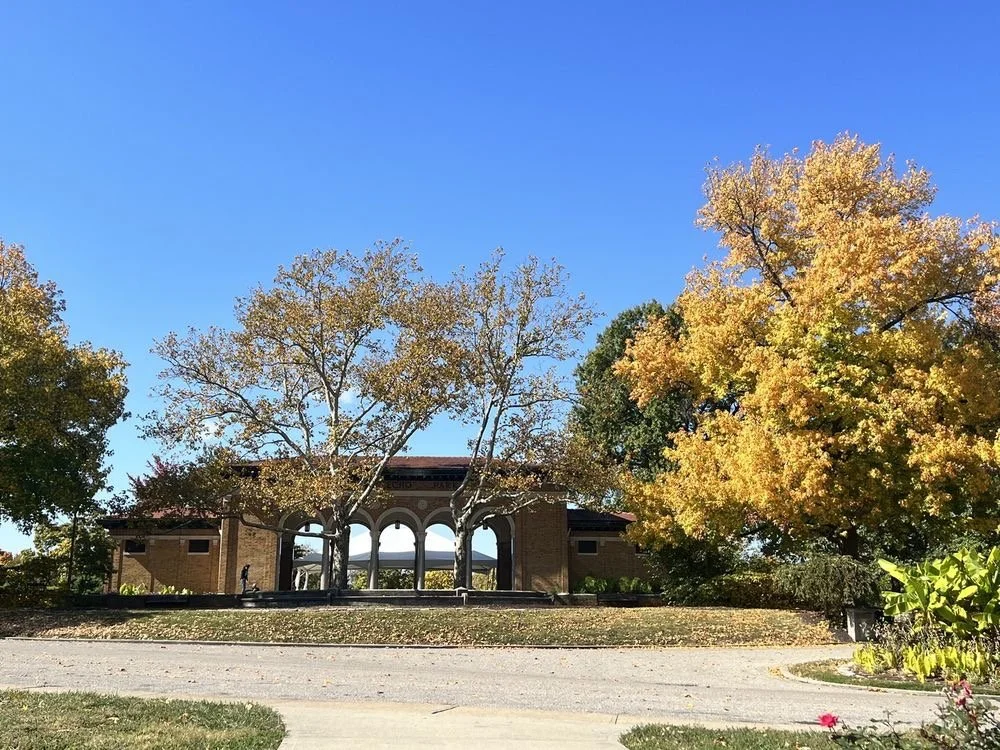
Mt. Echo Park - See Cincinnati from a different angle.
Cincinnati is a city shaped by its hills, and Mt. Echo is one of my favorite places to really see that.
The park occupies 97 acres of steep wooded hillside above the Ohio River. Once part of a dairy farm, the land became a public park in the early 1900s. Later additions, including its 1928 pavilion and historic picnic shelter, turned the hilltop into one of the west side’s great gathering places.
But the view is what brings me back. From the overlook, you can see the river, Northern Kentucky, Cincinnati neighborhoods and layers of wooded hillsides all at once. In fall, those hills become the star of the show.
Mt. Echo is one of the featured destinations in Cincinnati Parks Foundation’s Overlook Challenge, which celebrates something I think is special about Cincinnati. Our overlooks are more than pretty places to take pictures. They connect us to the city, remind us of what makes it unique and help renew a sense of civic pride in the places we share.
There’s also a dedicated group of neighbors helping make Mt. Echo special. The Mount Echo Park Advisory Council (MEPAC) brings the community together through events like Riverfest West and Moonlight Dance, giving people more reasons to gather and enjoy this beautiful hilltop park.
Cincinnati Parks Foundation supports MEPAC and other Cincinnati Parks Advisory Councils through its CPAC Grant Program, providing funding for free community events and programs. It’s a great example of how local volunteers, community pride and a little extra support can bring our neighborhood parks to life.
Don’t Miss: Visit the historic picnic shelter, designed by local architect R. Carl Freund and built by WPA workers in 1940. Its unusual stone chimneys and low roof reflect the influence of Frank Lloyd Wright, adding another layer of architectural history to this hilltop park. Go close to sunset for the best views.
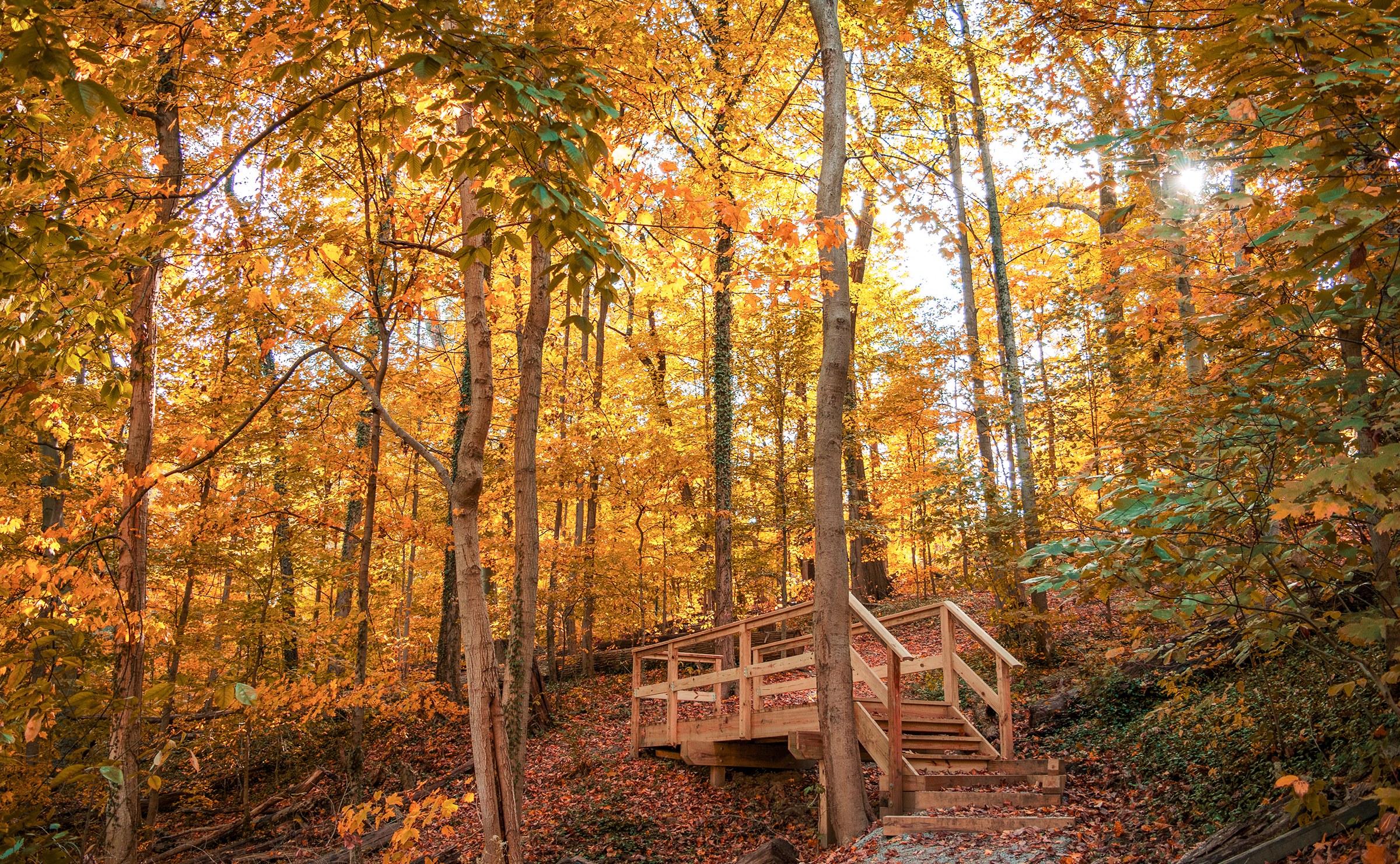
Burnet Woods - Find nature in the middle of everything.
Burnet Woods is a park I think people sometimes forget to explore.
Officially opened to the public in 1874, it is one of Cincinnati’s oldest parks. Today it sits surrounded by Clifton, the University of Cincinnati and some of the busiest streets in the city, yet inside you’ll find a mature forest, meadows, trails and a lake. Some of its woods even contain old growth trees, and the park is an important refuge for migrating birds.
That contrast is what makes Burnet Woods so interesting to me. You don’t have to leave the city to experience nature. You can walk around the lake, disappear beneath the trees for a bit, visit the playground or simply find a bench and watch the leaves change while the city keeps moving around you.
Cincinnati Parks Foundation has been part of the park’s story for years. Support has helped renovate the Trailside Nature Center, upgrade its planetarium, plant memorial groves totaling 75 trees and create the O’Brien Diggs III Plaza and garden at Clifton and Ludlow. The Foundation also supports Nature Education programs that help children and families connect with the natural world through hands-on learning and exploration, along with community activities like wellness programs and Wednesdays in the Woods.
The Osher Center for Integrative Health at the University of Cincinnati also brings people into the park through its Well-being Walks, inviting participants to slow down, enjoy the outdoors and experience the benefits of spending time in nature. As a community partner of Cincinnati Parks + Rec for Wellness, the Osher Center shares the Foundation's mission of connecting people to nature, movement and community through free outdoor experiences across our city. It's another reminder that our parks are places to care for ourselves as much as the landscapes around us.
Try to Find: H. H. Richardson Monument (1972). Possibly the park's strangest feature. Fifty one massive pink granite blocks, weighing a combined 84 tons, were salvaged from Cincinnati's former Chamber of Commerce Building after a 1911 fire. They were eventually arranged into a Stonehenge like sculpture through a UC architecture design competition.
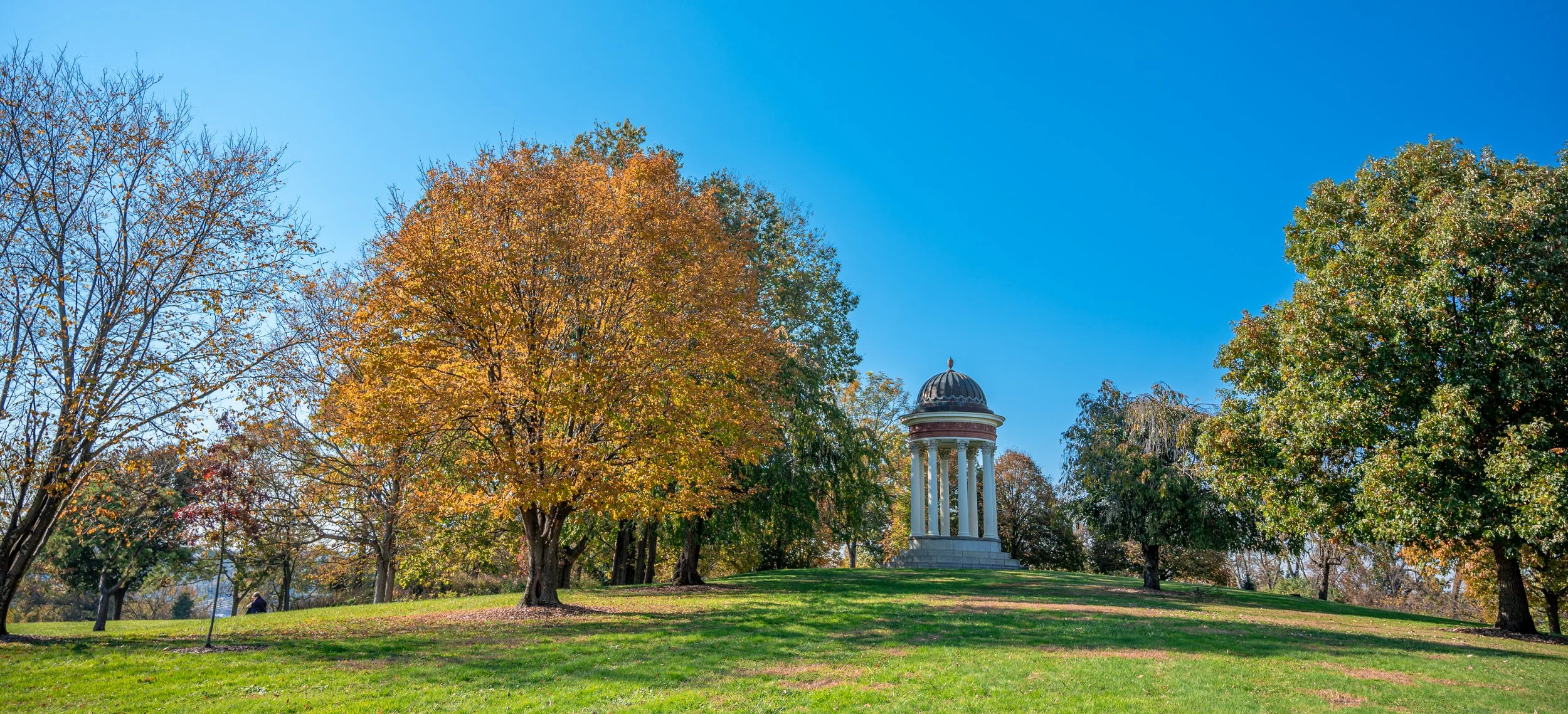
Mt. Storm Park - Slow down and look out.
Another Clifton park, Mt. Storm is one of those places that just feels like Cincinnati to me.
The park sits high above the Mill Creek Valley between Clifton and Northside, with rolling lawns, mature trees and one of the most recognizable structures in the park system, the Temple of Love. The temple predates the public park and survives from the estate that once occupied this hilltop. Today, it gives Mt. Storm a sense of history that feels a little unexpected when you first wander across it.
The landscape you see today has also benefited from Cincinnati Parks Foundation support. In 2019, the Foundation raised funds to plant more than 100 trees in Mt. Storm Park using a landscape design inspired by influential Cincinnati Parks designer Adolph Strauch’s historic vision for the site.
And now that story is growing beyond the park’s existing boundaries. With support from the Clifton community, Cincinnati Parks Foundation reached its fundraising goal to preserve 27 acres of green space adjacent to Mt. Storm. Protecting that land means preserving more of the wooded hillside that makes this part of Cincinnati feel the way it does.
Fall is a great time to do almost nothing here. Bring a picnic. Find a spot on the lawn. Look west across the valley as the surrounding trees change color.
Fun Fact: Mt. Storm was once home to seven Australian swans swimming through the ornamental lakes of Robert Bowler's elaborate estate. Bowler later donated swans to Spring Grove Cemetery, and historical accounts suggest that some of Spring Grove's swans descended from those at Mt. Storm. The dusty rose colored frieze of the Temple of Love is adorned with a swan motif, a charming reminder of the birds that once called this hilltop home.
Go see what’s changing.
What I love about exploring Cincinnati Parks is seeing how history, nature and community come together. Each park tells a different story about our city, and Cincinnati Parks Foundation helps shape what comes next. From restoring forests and protecting green space to planting trees, supporting nature education and bringing neighbors together, the Foundation and its supporters are making a lasting impact on the places we love. That work is made possible by donors, volunteers and neighbors who believe our parks are worth investing in. And the best part is that you can see the results for yourself, in the forests being restored, the trails we explore and the public spaces we share. Fall just happens to be a particularly beautiful time to experience it all.
Derek Scacchetti is the Graphic Designer at Cincinnati Parks Foundation, where he brings parks to life through design, creating everything from the website and campaign mailers to swag, event experiences and the printed pages of The Acorn. He is also the founder of Urban Rangers, a community that gathers regularly to explore Cincinnati on foot. On his hikes, Derek swaps layouts for landscapes, drawing on his background in urban planning, public art, community preservation and Cincinnati Parks to help people see the city with fresh eyes.